Putting WEIRD behavioural science in its PLACE
August 3, 2026
When behavioural science tells us they have evidence for how “people” behave, we tend to assume it’s shorthand for “all people”. But who is it really talking about? If you’ve been following Common Thread for a while, you probably know the answer is… WEIRD.
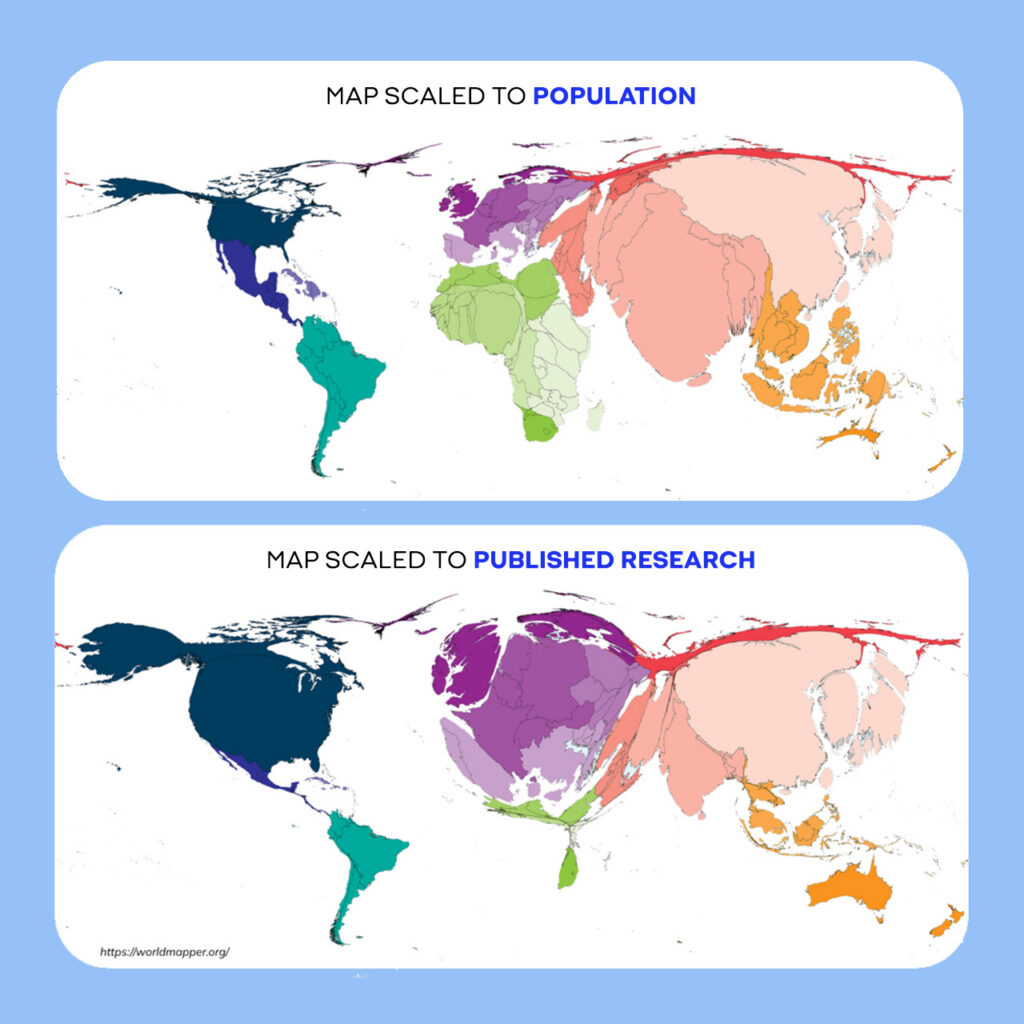
If you want to see the issue at a glance, look at a world map scaled to population, then one scaled to published research. On the second map, Africa nearly disappears.
We’ve drafted a checklist or ‘framework lens’ that we think will help practitioners applying behavioural science in non-WEIRD contexts. It’s an issue we’ve wanted to tackle for some time, and the 2026 SBCC Summit in Panama felt like the perfect place to start, by testing it with colleagues from around the world… we know it isn’t perfect or exhaustive, but as behavioural designers ourselves, we have sometimes wished for a guide to make sure that we are not perpetuating the flaws of this exciting field, and instead help to make it better and more applicable for every society.
What’s the problem?
To date, behavioural science (BehSci) has largely been built by, and measured against, WEIRD people: Western, Educated, Industrialised, Rich, Democratic.
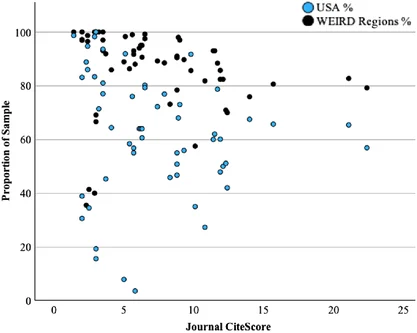
Some researchers estimate that 96% of participants in the six top psychology journals come from WEIRD societies, despite these societies representing only 12% of the world’s population. Since 2010, when Henrich and other colleagues coined the term ‘WEIRD people’, years later the skewness of psychological sciences remains nearly the same. A study covering over 1,200 peer-reviewed studies published in 2024 found some improvement compared to the previous year but probably not good enough, since US participants alone still made up 59% of samples.
We’ve written & spoken a lot about the WEIRD bias in BehSci, and more broadly about the need to decolonise the way the Global North interacts with the Global South:
Evidence (sometimes) travels badly
Intervention and programme design that carries on borrowing “universal” principles and applying them in contexts where they’ve never been tested runs real, proven risks of doing more harm than good:
- In one famous example from the UK, letters to taxpayers with messaging that highlighted paying tax as a social norm increased tax compliance by around 5%. In Argentina, however, a similar campaign backfired, making some taxpayers less likely to comply.
- In-group bias (i.e., favoring more someone in the same group) seems to be culture-dependent and people show stronger in-group bias in contexts where uncertainty, threat, or ambiguity feel more important to manage.
- In a classic motivation study, European American children were more motivated when they chose tasks for themselves, while Asian American children were just as motivated when a trusted person chose for them.
- In an experiment involving choices between (a) smaller, sooner monetary rewards and (b) larger, later rewards, Chilean participants discounted future rewards more steeply than Chinese participants, suggesting a stronger preference for more immediate rewards.
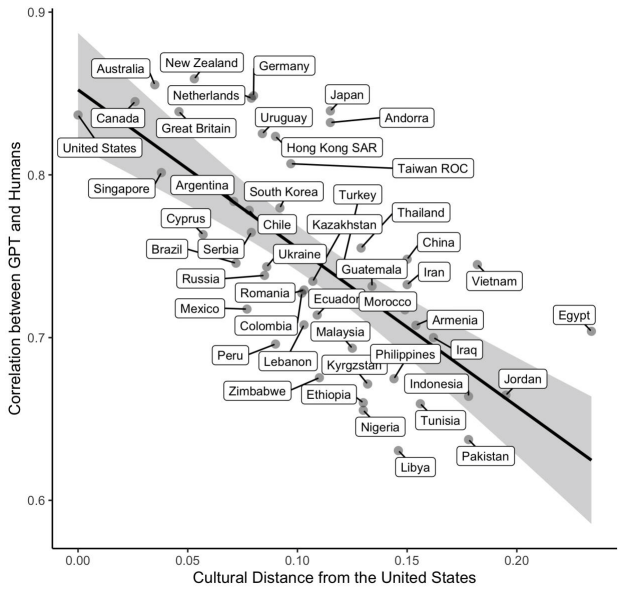
Even our new AI tools have inherited the skew. When researchers compared GPT’s responses to global survey data, its answers looked most like those of people in the United States and least like those of people in countries such as Pakistan, Libya and Nigeria.
EAST and COM-B: still the GOATs, but…
Let’s be clear: we love the classics. We aren’t trying to ditch frameworks like EAST and COM-B – they’ve earned their place in the practitioner’s toolkit and helped the world adopt and apply a behavioural science lens in different places and challenges.
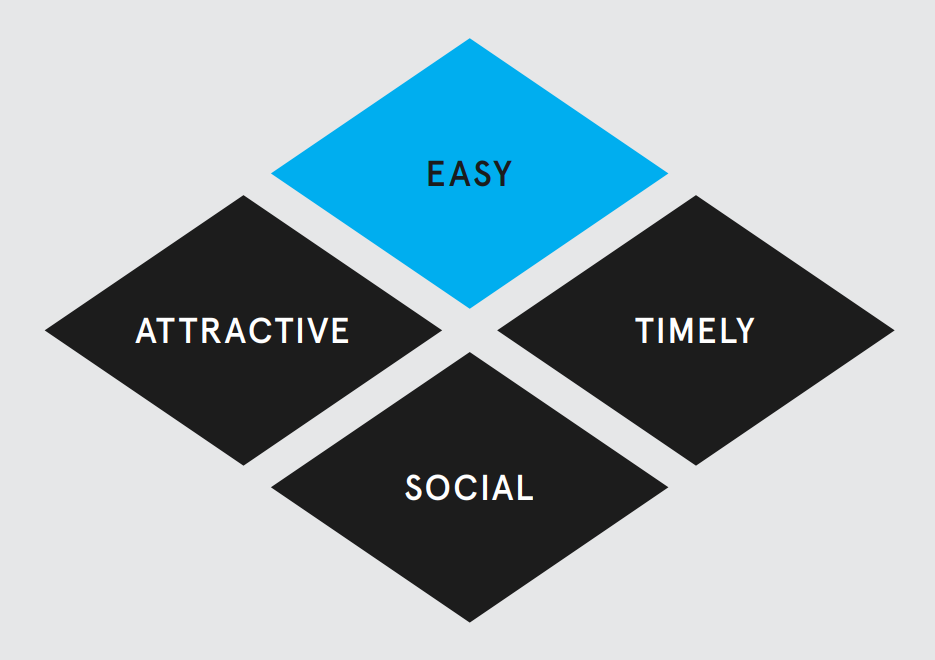
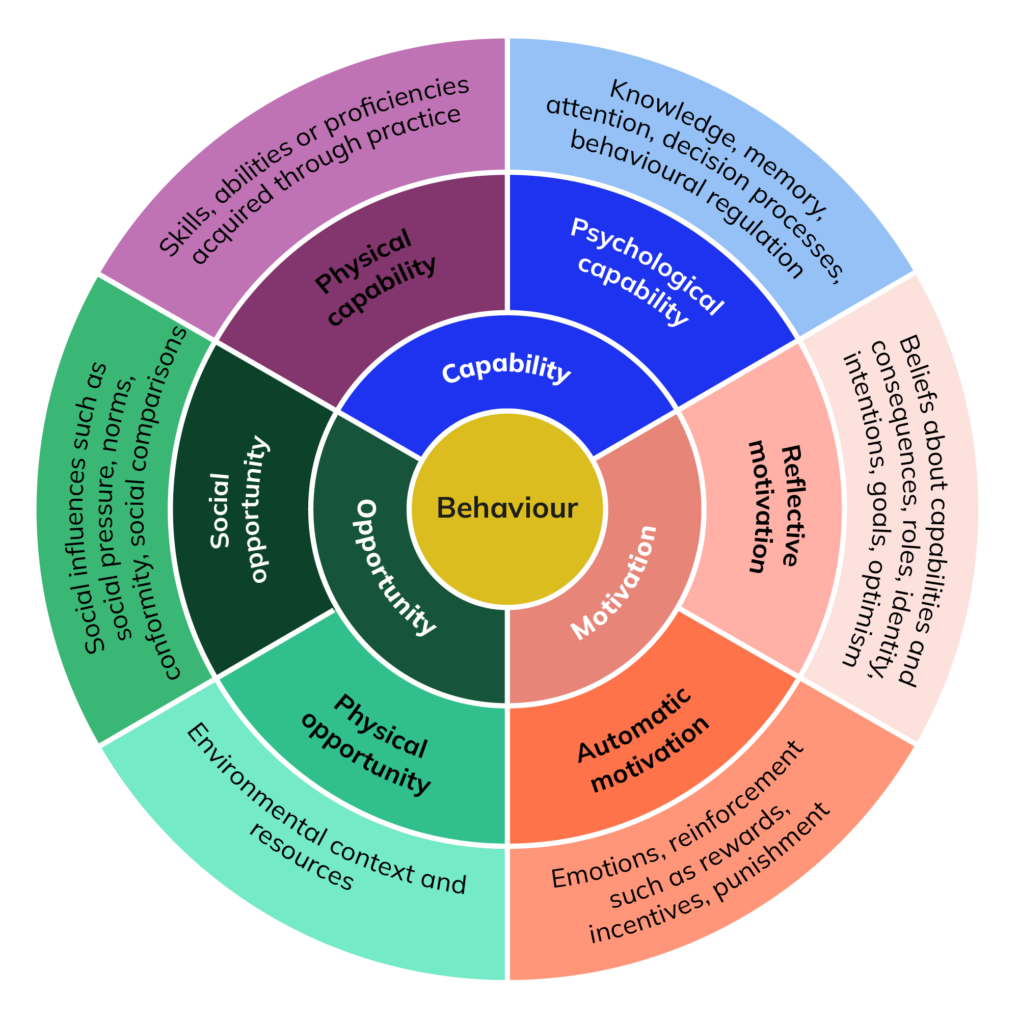
But they don’t make the nuance required to apply behavioural science in non-WEIRD contexts salient and timely enough. So, we needed something practical that could make that nuance more EAST: a reminder to make us think about where the evidence came from, who holds power in the setting we’re working in, what history walks into the room before our message does.
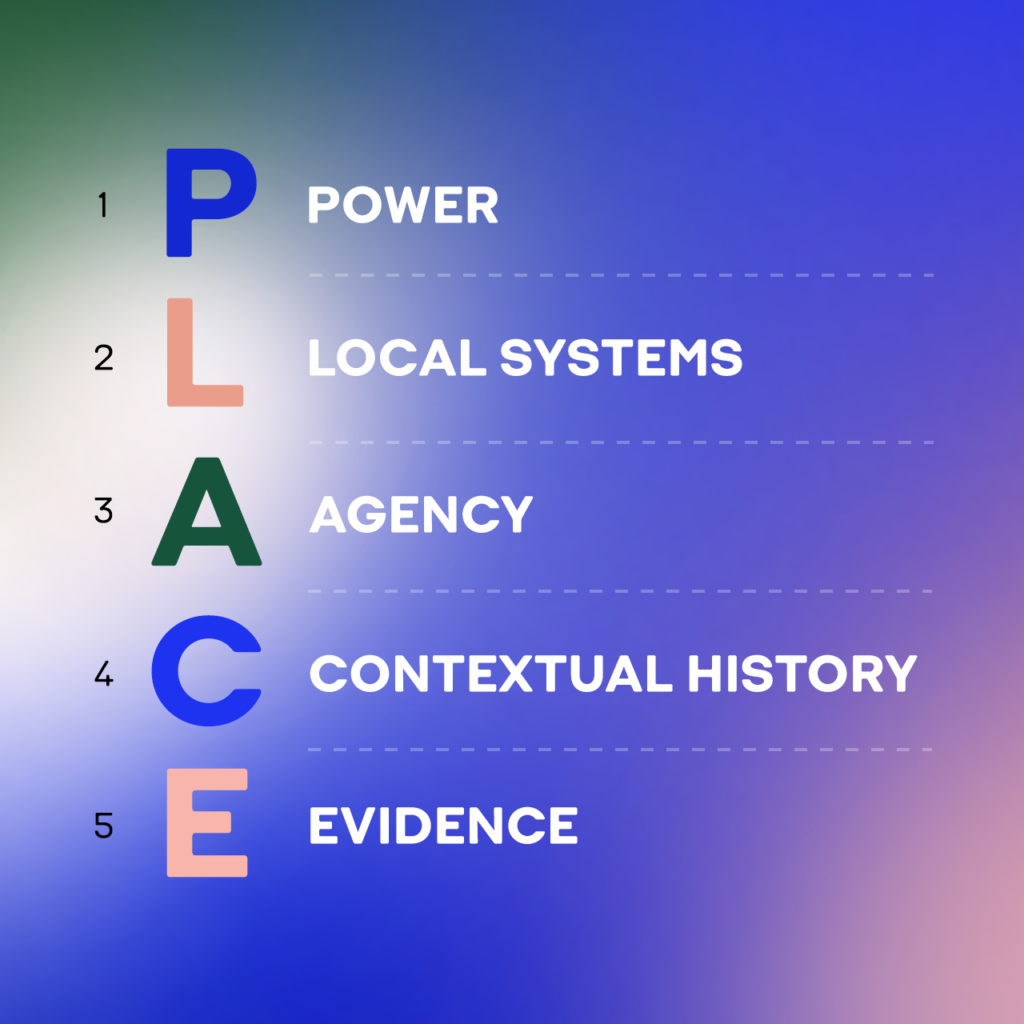
Introducing PLACE
PLACE is a set of five checks we propose running before you reach for COM-B or EAST. It’s a lens through which we think focusing more inclusive, and therefore effective, interventions might be easier. We propose to run PLACE first, then design with the tools we already know.
1. Power
Who designed this, and whose voices were absent? Does the power structure of the design team mirror the power structure creating the problem?
WHY IT MATTERS
- People may be asked for input but still have no power to change decisions
- The people most affected may be missing from the decisions that matter
EXAMPLE
City planners held public hearings. Communities testified. Yet the power to decide often remained elsewhere. Arnstein called it “the empty ritual of participation” (Arnstein, 1969).
⚠️ Warning signs
- Community members were consulted but could not change key decisions
- The affected group was treated as informants, not decision-makers
- Final decisions stayed with external experts
? What to investigate
- Who made the final decisions?
- Which decisions could the community actually redirect?
- What happened when community input conflicted with expert assumptions?
? Possible design response
- Shift selected decisions to community control
- Add veto points
- Move from consultation to partnership or shared governance
2. Local systems
What informal systems are already doing this work? Will this intervention work with them, or accidentally displace them?
WHY IT MATTERS
- New programmes may replace local systems that already work
- Informal systems may solve problems that formal services do not see
EXAMPLE
Kenyan women joined informal savings groups in which everyone contributed regularly and members took turns receiving the pooled money. The group made saving easier by creating a clear social obligation to contribute. A formal bank product might look better to a policy designer, but it could remove the very social pressure that helped women set money aside and resist competing demands on it (Gugerty, 2007).
⚠️ Warning signs
- The programme introduces a new channel, group, tool, or process without mapping what already exists
- Existing informal systems are dismissed as inefficient
- Trusted actors are used only for dissemination, not design
? What to investigate
- What systems do people already use?
- What behavioural function do they serve?
- What would be lost if the intervention replaced them?
? Possible design response
- Build through existing systems
- Strengthen existing infrastructure
- Avoid parallel structures that compete with trusted mechanisms
3. Agency
Is non-uptake a rational response to social risk rather than a failure of motivation? Is this an individual decision or does change require collective action?
WHY IT MATTERS
- People may want to act but fear consequences from family, peers, or leaders
- The decision may not belong to one person alone
EXAMPLE
In Zambia, 53% of women given private access to contraception used the service, compared with 43% of those whose husbands were given joint control over access. The barrier wasn’t motivation, it was the social consequences women could face for acting without their husband’s approval. (Ashraf et al, 2014).
⚠️ Warning signs
- People express interest privately but do not act publicly
- Uptake changes when spouses, elders, peers, or leaders are present
- The behaviour depends on what others do
? What to investigate
- Who can approve, block, punish, or enable the behaviour?
- Is this an individual choice, household decision, or social convention?
- What social costs does action create?
? Possible design response
- Design for privacy or safety
- Shift from individual nudges to household or community strategies
- Use coordinated commitments where needed
4. Contextual history
Does the messenger, funding source, or framing carry historical associations that will shape how this is received?
WHY IT MATTERS
- People may distrust a programme because of past experiences with similar institutions
- Lack of trust in institutions might be relevant for the intervention
EXAMPLE
Regions in Central Africa that were more exposed to coercive sleeping-sickness vaccination campaigns between 1920’s and 1950’s have lower childhood vaccination rates and less trust in medicine to this date. What looks like present-day “hesitancy” may be reflecting its history and the collective memory of harm, rather than simply misinformation (Lowes & Montero, 2021).
⚠️ Warning signs
- People distrust the programme before hearing the message
- The institution is technically credible but socially illegitimate
- The programme resembles previous harmful, coercive, extractive, or failed interventions
? What to investigate
- What is the history between this community and similar institutions?
- What does the branding, funding source, or delivery channel signal?
- Is hesitancy being misread as ignorance?
? Possible design response
- Change the visible messenger
- Reduce problematic branding
- Establish credibility before making an ask
5. Evidence
Is the science we’re standing on built on people who look like the people we’re designing for?
What and how are we measuring things?
WHY IT MATTERS
- Evidence from one context may not work the same way somewhere else
- We may be relying too much on studies from WEIRD populations
- We may be using “validated instruments” but from WEIRD populations
Researchers tested the Big Five personality model, which groups personality into five broad traits, among Tsimane forager-horticulturalists in Bolivia. The familiar five-trait structure did not fit the data well, suggesting that the model may not describe personality in the same way across all cultures (Gurven et al., 2013)
EXAMPLE
Researchers tested the Big Five personality model, which groups personality into five broad traits, among Tsimane forager-horticulturalists in Bolivia. The familiar five-trait structure did not fit the data well, suggesting that the model may not describe personality in the same way across all cultures (Gurven et al., 2013).
⚠️ Warning signs
- The mechanism is borrowed from global literature but has not been tested locally
- The cited studies come from very different populations
- Local or grey literature has not been reviewed
? What to investigate
- Where was the evidence generated?
- Who were the participants?
- Has the mechanism worked in similar contexts?
? Possible design response
- Treat the mechanism as uncertain
- Run formative research or small tests
- Use local and grey literature
- Make uncertainty explicit
De-WEIRDing isn’t about swapping a Western default for a “Global South” one. It’s about ensuring that context is truly taken into account — everywhere. The same five checks belong in Buenos Aires, Nairobi, Bangalore, and London.. But it’s a work-in-progress tool, and it might still be a little rough around the edges.
Like everything we build, it will get better the more the community owns it. That’s where you come in!
What’s next? How do I find out more?
We debuted PLACE at the International SBCC Summit in Panama City this June. The conversations it sparked there, in hallways and in the session itself, convinced us it was time to share it more widely. So here it is.
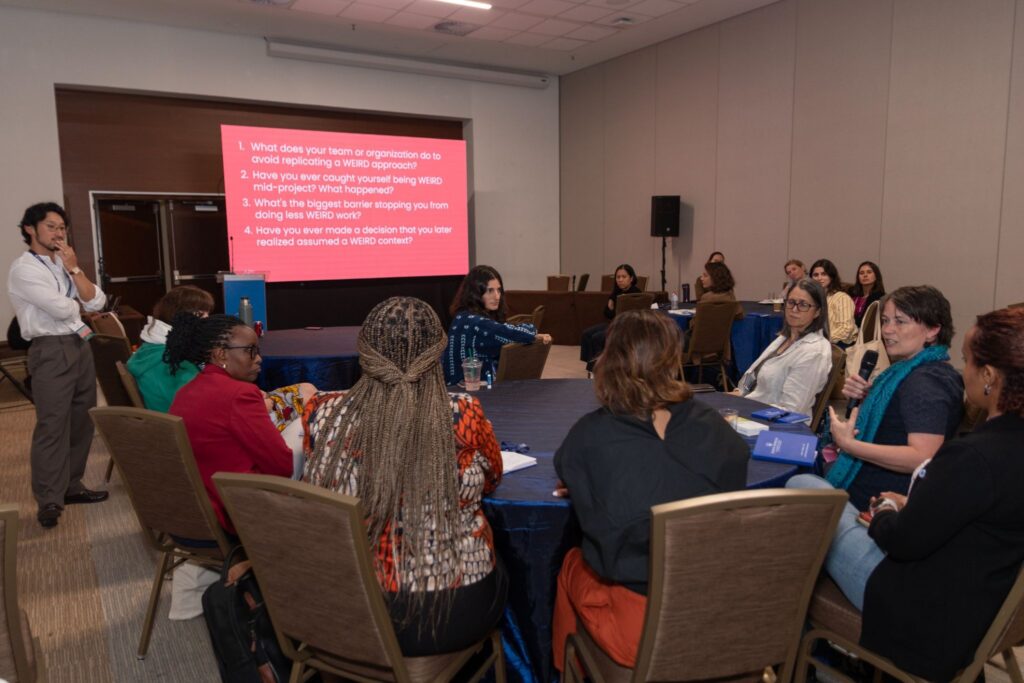
We’d think it’s ready enough to host a wider conversation on making PLACE real for the sector: what needs tweaking, using it in practice, and using what you find to guide design decisions. If you’ve already got thoughts, challenges, or a story about evidence that didn’t travel, we’d love to hear it. Drop us a line at ol@gocommonthread.com or find us on LinkedIn.
Oh, by the way, we will present a little bit about this framework in the next webinar hosted by BeScy on August 13th. More details soon