Common Thread at the International SBCC Summit 2026
June 12, 2026
We’re heading to Panama City! Four members of the Common Thread team will be at the International Social and Behavior Change Communication (SBCC) Summit June 22-26 2026 — and we’re not just attending, we’re showing up with something to say.
The SBCC Summit is one of the most important gatherings in our field, bringing together practitioners, researchers, and policymakers from around the world to share what’s working, challenge what isn’t, and shape the future of social and behaviour change. We’re proud to be contributing to that conversation this year with six sessions across the week.
Here’s what we’ll be up to:
Our Sessions
PANEL PRESENTATION
From Misinformation to Meaning: Trust and Health Decisions in a Fragmented Information Ecosystem
Monday 22 June, 16:00 – 17:15 | Room: Istmo – 4
As misinformation, distrust, polarization, and algorithmically-amplified harms increasingly shape work in the humanitarian and development space, many organizations continue to rely on “social listening” approaches focused narrowly on tracking online content and narratives.
However, emerging research argues that these approaches are insufficient unless they are rooted in communities, connected to offline realities, and linked to meaningful response systems, not just correction.
This session will bring together leaders from multiple sectors to explore:
- What a community-centered approach to information ecosystems looks like in practice;
- How organizations can move beyond reactive monitoring toward trust-building and structural interventions;
- What cross-sector collaboration is needed to address the broader “distrust ecosystem” affecting health, democracy, climate, and social cohesion; and
- How communicators, researchers, community leaders, and policymakers can co-design more ethical, participatory, and effective systems.
The discussion will emphasize practical lessons, tensions, governance challenges, and opportunities for collaboration across disciplines and regions.
In collaboration with Gates Foundation.
AUXILIARY EVENT
From Change Stories to Systems Strengthening: SBC Lessons from UNICEF
Tuesday 23 June, 07:00 AM – 09:00 AM | Room: Pacifico – 5
In this side-event, UNICEF SBC team, in collaboration with the partner Common Thread, will share initial reflections on the positioning shifts experienced internally and externally, strides made towards enhancing systems by applying different SBC strategies, lessons learned from responding to public health emergencies post-COVID-19, as well as on the specificities associated with the implementation of SBC approaches in the Latin America and Caribbean region.
Participants, in a participatory World Café Style, will be invited to share their perspectives and contribute to an overall reflection on the state of the sector.
World Café style with 4 interactive stations focusing on:
- Institutional changes and trends, facilitated by Massimiliano Sani and Sherine Guirguis
- SBC System strengthening efforts, results and challenges, facilitated by Helena Ballester Bon, Andres Ochoa and Ol Beun
- Lessons learned from Risk Communication and Community Engagement programming to respond to public health emergencies and outbreaks, facilitated by Awet Araya, Mariana Palavra, Tetiana Korol and Humberto Jaime Villasenor.
- SBC approaches in Latin America and the Caribbean, facilitated by UNICEF SBC staff, Viviane Melo Bianco, Markel Mendez, Gerardo Marcano, and Jair Vega.
Lydia Trupe, Sherine Guirguis, and Ol Beun will co-lead the discussion.
PANEL PRESENTATION
From Vaccines to Vaccination: Building Resilient Coverage through a New Paradigm for Demand
Wednesday 24 June, 1:00–2:15 PM | Room: Pacifico – 4
When caregivers are asked why they don’t vaccinate their children, 87% cite demand-side barriers. That’s a staggering number — and it points to a fundamental gap in how the field has approached immunisation.
In this panel session, Sherine Guirguis will join colleagues from the Gates Foundation, Irrational Labs and ReD Associates to make the case for a new paradigm in Demand Generation. The conversation will centre on three mutually reinforcing pillars — data and measurement, behavioural science-backed intervention, and institutionalisation — and how investing in all three can create immunisation coverage that’s durable, equitable, and resilient to shocks. Sherine will present on why institutionalisation is even more important than ever in a resource constrained context where public health is under constant threat.
STORY
Adaptive SBC: Reaching People in Complex & Changing Contexts
Wednesday 24 June, 2:30–3:30 PM | Room: Caribe – 2
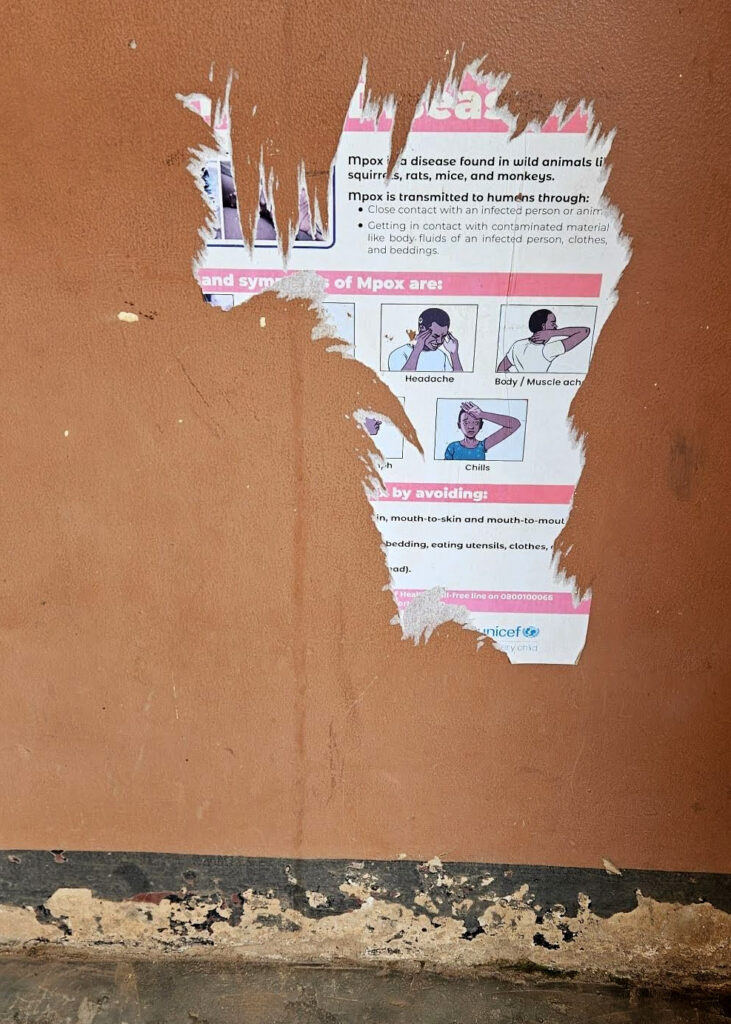
What does it really mean to meet people where they are — especially when “where they are” is constantly shifting? In this session of 10-minute stories, Sherine Guirguis will share lessons from working on Human-Centered Design in emergency settings, including the Mpox and SEA responses in East Africa.
Their talk challenges a common assumption: that HCD is a luxury that crises can’t afford. Drawing on real examples of rapid behavioural prototyping under pressure, they’ll argue that when design mindsets are embedded in local systems before a crisis hits, they can adapt in real time — and that readiness, not novelty, is what enables meaningful co-creation.
WORKSHOP
Decolonising Behavioural Science: Reimagining the Field for Inclusive Change
Thursday 25 June, 1:45–3:45 PM | Room: Caribe – 7
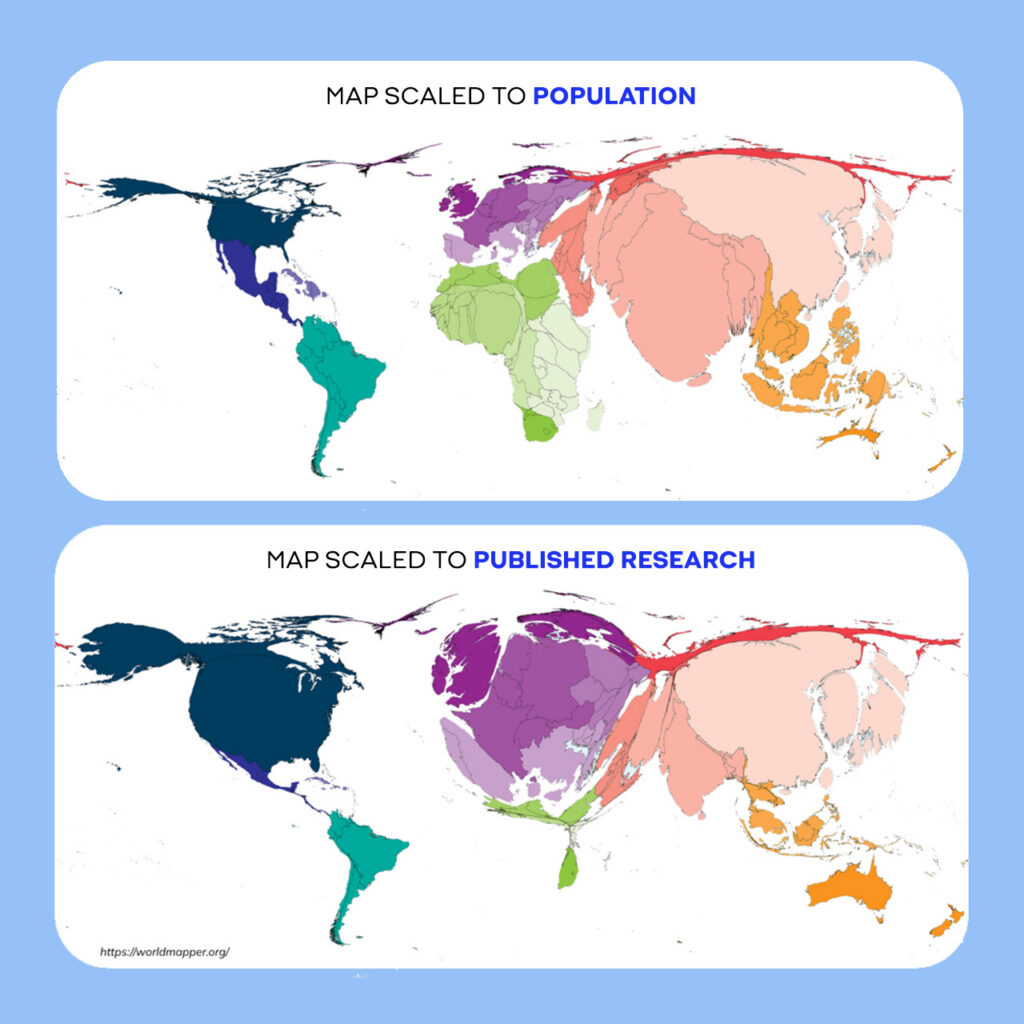
Over 90% of behavioural and social science studies come from WEIRD societies — Western, Educated, Industrialised, Rich, and Democratic. This imbalance in evidence shapes global theories of human behaviour in ways that often overlook socio-cultural and contextual differences. When “universal” insights are drawn from skewed evidence, interventions risk being both ineffective and inequitable.
This two-hour interactive workshop — skillfully led by Ol Beun — will give participants practical tools and frameworks to apply behavioural science in ways that are socially, culturally, and ethically informed. Through case studies, discussions, and live interactive experiments, we’ll explore how context shapes decision-making, how cognitive biases vary across cultures, and why rethinking what counts as evidence is essential for more equitable and effective change. Come join us!
WORKSHOP
Using Behavioural Science to Develop Targeted Interventions: A Toolkit to Build Localised Immunisation Demand Strategies
Friday 26 June, 9:45–11:45 AM | Room: Istmo – 4
This hands-on skills-building workshop showcases the Demand Strategy Builder (DSB) — an innovative new tool to empower local teams to develop their own strategies for increasing immunization demand.The DSB is designed to be locally led at the subnational level, bringing together government staff, healthcare workers, community leaders, and partners to co-create an evidence-based and actionable plan for increasing vaccine uptake among zero-dose and undervaccinated communities. The tool was developed by Common Thread and UNICEF, and is available as a global public good.
Cassie Hornsby-Waide will walk participants through the tool’s five-step process — from analysing existing data and aligning on the problem, through to exploring barriers and designing solutions — and then lead a gamified, hands-on activity using visual cards of behavioural science-informed interventions. It’s practical, it’s interactive, and it’s designed to be immediately useful.
Meet Our SBCC Squad
Four of us are making the trip to Panama City:




If you’re attending the Summit and want to connect — whether to talk about one of our sessions, explore potential collaboration, or just swap notes on what you’re seeing at the conference — we’d love to hear from you. Reach out ahead of time or come find us at one of our events.
We’re really looking forward to the conversations this summit always sparks. See you in Panama!