Is Behavioural Science Useful in the Chinese Context?
August 10, 2026
Have you ever wondered whether behavioural science “works” in China? Does it add value for policymakers there? Would people working on policies and programmes to protect and improve children’s lives find it useful? Would they apply it in the same way as behavioural scientists in the United Kingdom? What about in Argentina or Kenya?
We have designed and delivered capacity-building programmes across multiple countries, for different audiences and in different formats. However, this was our first time designing and delivering both an advanced workshop and a training-of-trainers programme in China. Here are some of the things we did and what we learned.
In case you are short on time or you like reading tweets rather than full articles, these are the key takeaways:
? Treat cultural differences as questions to explore, not universal rules. Research on how behaviour varies across cultures is often mixed and evolving. We therefore adapted our examples and case studies to the Chinese context while encouraging participants to test their assumptions.
? Adapt the application, not necessarily the entire approach. The core principles and tools of behavioural science can be useful across sociocultural contexts. What matters is adapting the evidence and applications, and testing whether they work locally.
? Practice what you preach. Incorporate behavioural insights into the workshop. Participants learn more by doing than by listening alone. We invited them to apply tools to real challenges from their work, while using small live experiments to bring key ideas to life.
? Build the evidence through local practice. To understand where behavioural science works, where it does not, and why, more people need to apply and test it in their own contexts, and share what they learn with the wider community.
Context
In early 2026, Common Thread collaborated with UNICEF China on a project to strengthen its capacity to apply social and behaviour change and behavioural science.
UNICEF China had a clear vision: to embed SBC capacity across UNICEF teams while also strengthening the skills of key implementing partners, including government officials, and academics.
If you are a behavioural scientist, or simply interested in the field, you may have wondered the same thing we did: are the methodologies and tools we use equally helpful in different sociocultural contexts?
Our challenge was therefore twofold:
- To design and deliver a training programme that could help SBC and behavioural science become a sustained practice within UNICEF, even without a dedicated team.
- To make sure the frameworks and tools were genuinely useful and contextually relevant in China.
UNICEF BIRD Lab’s DEPTHS methodology
To design the workshops, we looked for an approach that could help us build lasting skills rather than provide one-off training. So, instead of introducing a new methodology or borrowing one from another organisation, we built on UNICEF’s own knowledge, processes and standards. Fortunately, UNICEF’s Behavioural Insights Research and Design Laboratory, or BIRD Lab, had recently launched DEPTHS: a practical, step-by-step process supported by tools and frameworks for applying behavioural science from start to finish. Common Thread helped develop this ambitious body of work.
What is DEPTHS? DEPTHS is a systematic process developed by UNICEF to help practitioners apply behavioural science to real-world problems. It stands for Define, Explore and Diagnose, Prototype Designs, Test Hypotheses, and Scale.
- Define: Begin by identifying the problem and desired outcome, understanding the key stakeholders involved, selecting the behaviour you want to change and examining the wider system in which that behaviour takes place.
- Explore and Diagnose: Use existing evidence and mixed-methods research to understand why the target behaviour is or is not happening. Identify the most important behavioural barriers and enablers, as well as potential opportunities for intervention.
- Prototype Designs: Use creative activities, behavioural insights and co-creation methods to generate potential solutions. Develop the most promising ideas into prototypes and gather feedback from the people who might use them.
- Test Hypotheses: Develop research questions and select an appropriate, rigorous evaluation approach to test whether the intervention produces meaningful changes in the target behaviour.
- Scale: Use lessons from the evaluation to determine whether and how the intervention should expand. Adapt it to new populations, contexts or systems while preserving the elements that make it effective.
Visit UNICEF BIRD Lab’s website to learn more about DEPTHS.
This was not the first time we had used DEPTHS to build behavioural science capacity. We had already delivered programmes with UNICEF’s Latin America and the Caribbean Regional Office and its Europe and Central Asia Regional Office. But this was our first time using the methodology in East Asia, and specifically in China.
We prepared two training programmes:
- An advanced behavioural science workshop for UNICEF staff.
- A training-of-trainers programme for UNICEF colleagues and implementing partners.
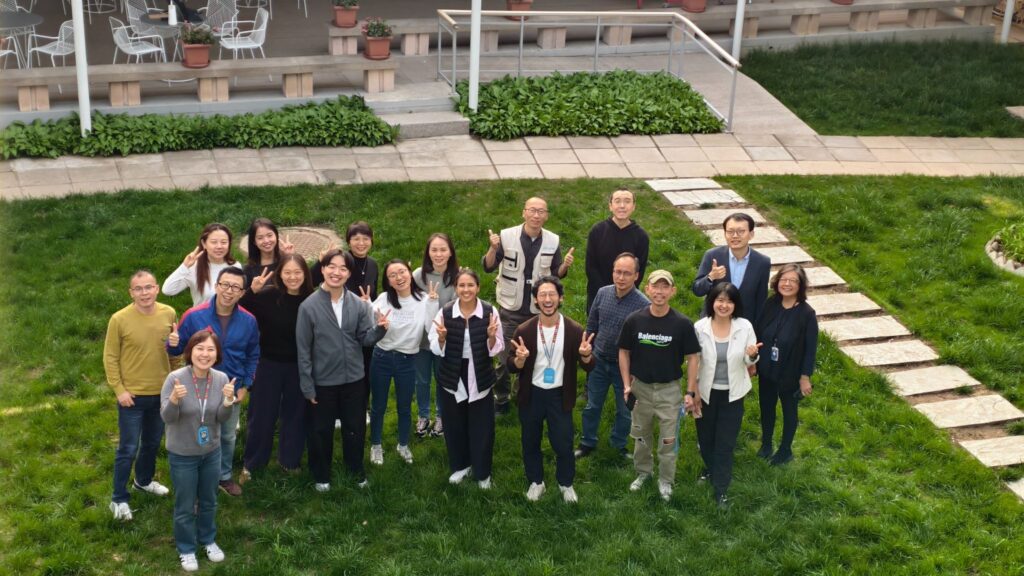
Across six days, participants learned how to run end-to-end behavioural science projects using the DEPTHS methodology.
Contextualization
There is a sweet spot between adapting a methodology to a particular context and changing it so much that it no longer shares a common process or language with the way other behavioural scientists and designers work.
The question, then, was: how could we train people to understand and apply behavioural science frameworks while also adapting them to the realities of their own context?
What had to be contextualised
Research has identified average differences in certain patterns of attention and causal explanation between samples from East Asian and Western contexts. These are not fixed cultural traits, and they do not apply to every individual. The wider evidence is also more mixed and nuanced than a simple “East versus West” distinction might suggest.
One classic example comes from a 1994 study by Michael Morris and Kaiping Peng. The researchers compared English-language and Chinese-language newspaper coverage of the same crimes. They found that the English-language reporting tended to place greater emphasis on the individuals’ dispositions, such as their personalities or psychological states. The Chinese-language reporting placed greater emphasis on situational factors, including social context, relationships, pressures and circumstances.
More recent scholarship has challenged overly broad interpretations of these differences and highlighted inconsistencies across studies. We therefore treated these findings as useful questions to explore, rather than universal rules about how people in China think or make decisions.
With this in mind, we adapted the examples and case studies used during the workshop. We also highlighted areas where research suggests that behavioural mechanisms may operate differently across contexts, encouraging participants to test these assumptions rather than simply accepting them. This created meaningful debates on the importance of not taking the evidence or a study at face value and instead reflect what are the key behavioural insights to be adapted and applied for their own challenges and projects.
What remained the same
Participants responded positively to the overall DEPTHS approach and process. As one participant shared after the workshop:
“I particularly appreciate the DEPTHS methodology, as it helped me structure my framework and design more effective, insight-driven interventions.”
Adapting behavioural science does not necessarily mean replacing its core process or tools. Our experience suggests that the overall principles and methods can be useful across sociocultural contexts, provided that the examples, assumptions and applications are adapted and tested locally.
What worked similarly to other workshops
In our experience, workshops are more effective when participants can apply and practise the theory rather than simply listen to it.
We therefore try to bring behavioural science into the workshop room itself. Participants apply tools and frameworks to real challenges from their work, while small behavioural demonstrations take place around them.
For example, we placed two jars of chocolate candies in the room. There was one small difference between them that almost nobody noticed, but it appeared to influence what happened.
- Jar A: The jar was closed. Anyone who wanted a chocolate had to remove the lid first, creating a small friction cost.
- Jar B: The jar was open, with a spoon ready to use. We had removed the friction of opening the jar (while also making things a little more hygienic by keeping everyone’s hands out of it).
The result after one day of training? See the images.

Of course, this was a playful workshop demonstration, not a controlled experiment. But we have tried it in several workshops with very different groups of participants, and the pattern has been remarkably consistent. China was no exception.
So yes: even a tiny amount of friction can shape behaviour, including something as simple as reaching for another chocolate.
What’s next?
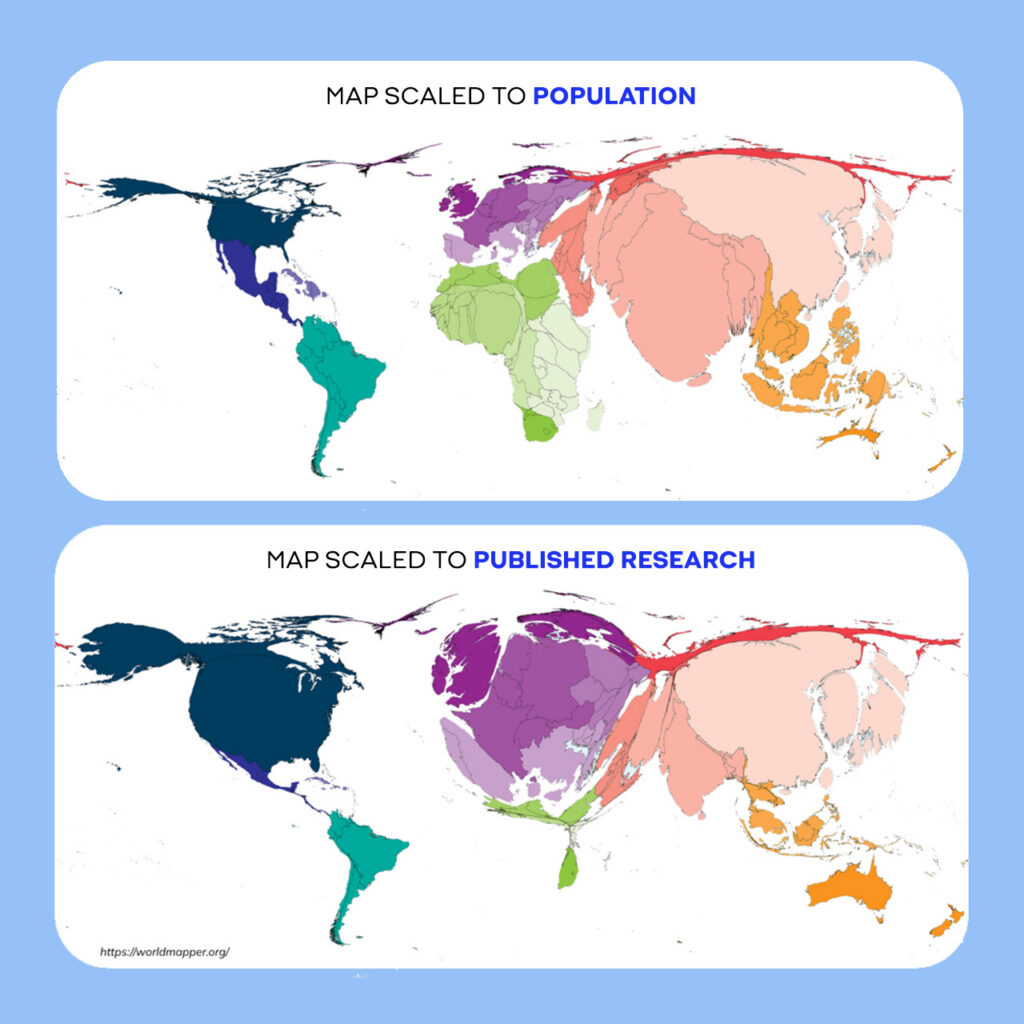
We are passionate about understanding the heterogeneity of behavioural science: where it works, where it does not, when and why.
One way to answer these questions is to train more people to apply behavioural science in their own contexts. They can test the ideas themselves, learn what needs to be adapted and share their findings with the wider community.
That is how we can build a behavioural science that is not simply exported from a small number of countries, but tested, challenged and strengthened through evidence generated around the world.
If you are part of the growing group of people who believe that behavioural science can be a helpful and valuable approach, but that it must be tested and replicated in different contexts, reach out to us.
Let’s talk.