
POLAND
Digital tools for displaced Ukrainian youth
Photo: Solidarity with Ukraine by Alisdare Hickson (CC BY-SA 2.0)
How might we raise the voices of Ukrainian adolescents displaced by war through responsive digital tools?
At a Glance
As Ukrainian families fled to Poland, adolescents were often overlooked in overstretched support systems. Through rapid research, young Ukrainians told us they felt the services and feedback systems were not designed with them in mind, leaving them with a sense of being left behind, somewhere between very young children and the adults responsible for them.
Using rapid human-centred design sprints, we prototyped a chatbot reflecting adolescent’s questions and needs. From there, we developed a digital decision tree to help make their complex educational decisions easier to understand and act upon.
The context:
When war broke out in Ukraine, millions crossed the border into Poland in search of safety. In a matter of months, over 3 million people had crossed into Poland1, with over 700,000 school-aged children among them2. But only a fraction of those children were enrolling in school, and many families were torn between complex decisions about staying or eventually returning to Ukraine.3
UNICEF Poland was one of many actors operating in a fast-changing, and crowded service landscape. They asked Common Thread to help reimagine services around what families actually needed, without assuming everyone’s journey looked the same.


Our team travelled across six cities, visiting refugee reception points to better understand the journeys of refugees.
We wanted to know what services were available to them, the decisions they were making, and the context in which they were making them.
EU Civil Protection in Poland by EU Civil Protection and Humanitarian Aid/Wojtek Radwanski
(CC BY-NC-ND 2.0)
WHAT WE HEARD:
We travelled to six cities, visiting reception points and speaking directly with those giving and receiving services. Through 18 site visits and multiple interviews, we listened to refugees, frontline staff, and those falling through the cracks.
The system and services, we learned, was designed to help people settle and build new lives, while many displaced families were still living with uncertainty, unsure whether they would stay, move on, or return home. Across these different journeys, families shared common hopes: to preserve their Ukrainian identity while in Poland, stay on track with work and education, be good guests, express gratitude to Polish communities and government, and keep open the possibility of returning home.
But adolescents felt this uncertainty most sharply. Many described their lives as being on pause, hesitant to make decisions without knowing where they would end up. Some responded by committing to their options in Poland and, in some cases, thriving. Others were focused on returning home as soon as possible, using their time in Poland deliberately to build skills and continue learning with an eye to return.
Our Solution:
There was a clear gap between adolescents’ uncertainty about their future and the limited space they had to ask questions or access guidance. Young Ukrainians were digitally connected and highly comfortable online.
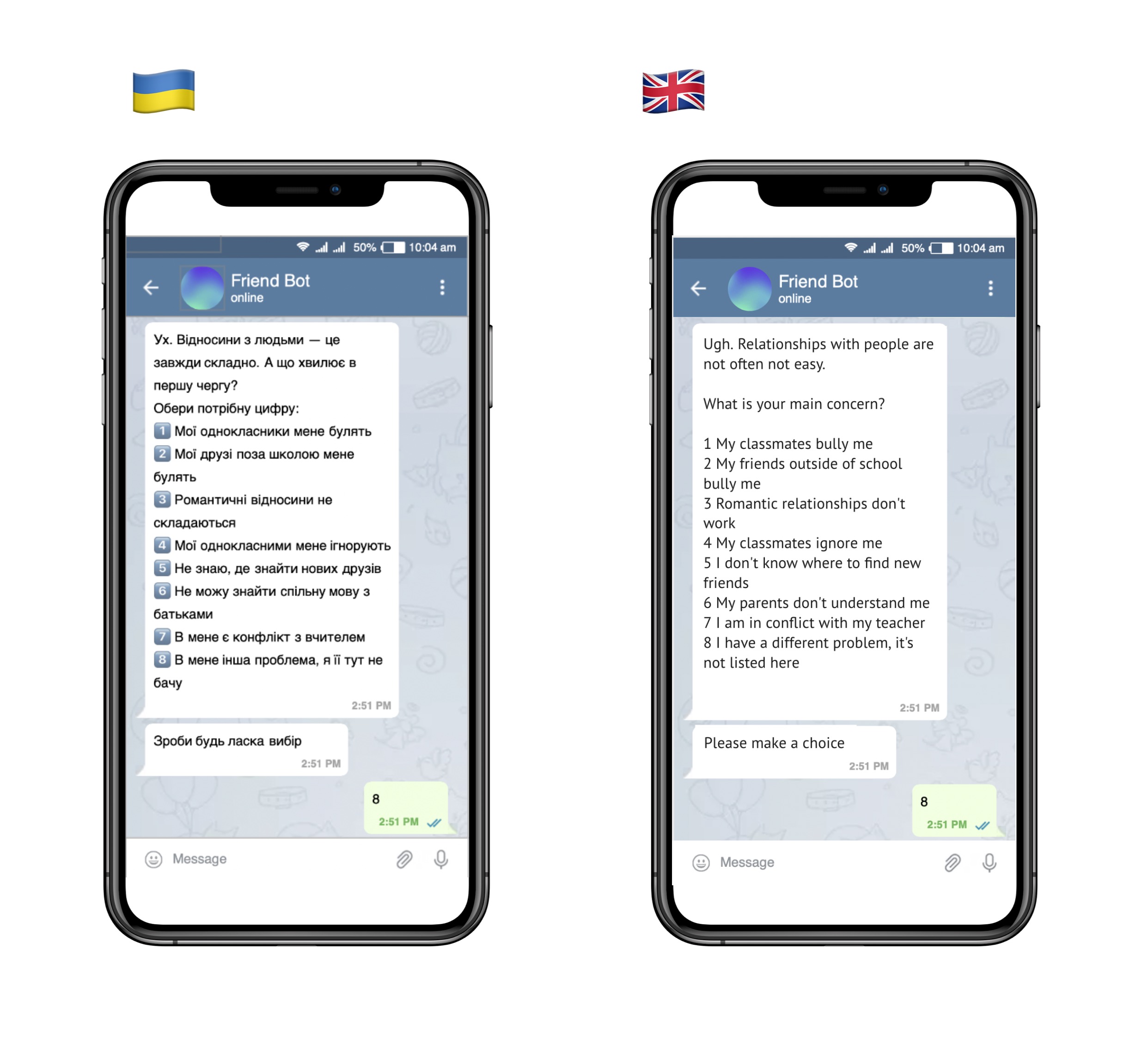
In response, we developed a chatbot open to UNICEF’s UReport system that created a safe space for adolescents to ask questions and access trusted information. Alongside supporting adolescents directly, the chatbot also generated insights from adolescent feedback for organisations working with Ukrainian refugees, helping partners design services that better reflect adolescents’ actual needs and experiences.
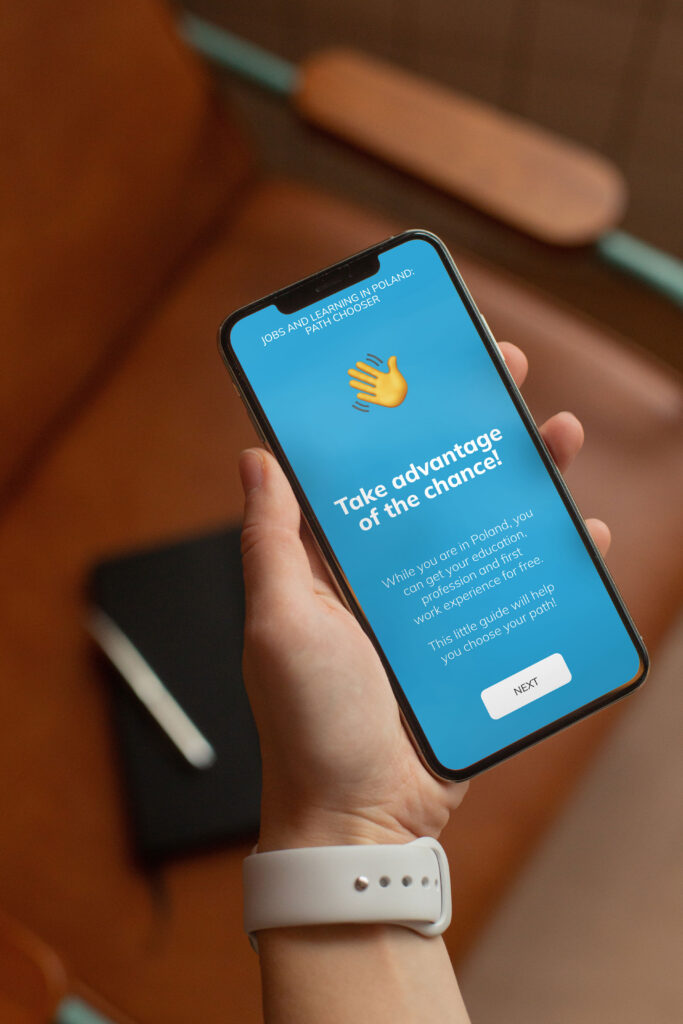
To address their most pressing concern, education, we built a prototype digital decision tree to support adolescents through the complex educational pathways in Poland, and what implications this had for their further study and career prospects in both Poland, and in Ukraine. Depending on their plans to stay, move on, or return home, the decision tree helped them understand their education pathways, navigate system requirements, and clarify next steps.
Impact
Both the chatbot and the decision tree were successfully handed over to Government partners. The decision tree was hosted on municipal websites for helping adolescents navigate choices in the complex Polish education system. The chatbot was adapted for UNICEF’s UReport app, and rolled out to attract younger UReporters and their views. The prototypes helped make the issues visible, provided concrete tools for local adoption and for collecting the views and needs of often overlooked adolescents.
Check out the design principles that lead to them:
- King, Laura. “A staggering refugee burden evokes a haunting history in Polish capital.” Los Angeles Times, 28 April 2022. Accessed 20 Dec 2022.
- Poland: Refugee Influx from Ukraine, 6.
- UNICEF ECARO Humanitarian Situation Report (Refugee Response) for 4-11 May 2022


